



Embroidered Silk Organza


FAQ
1.What is silk organza fabric?
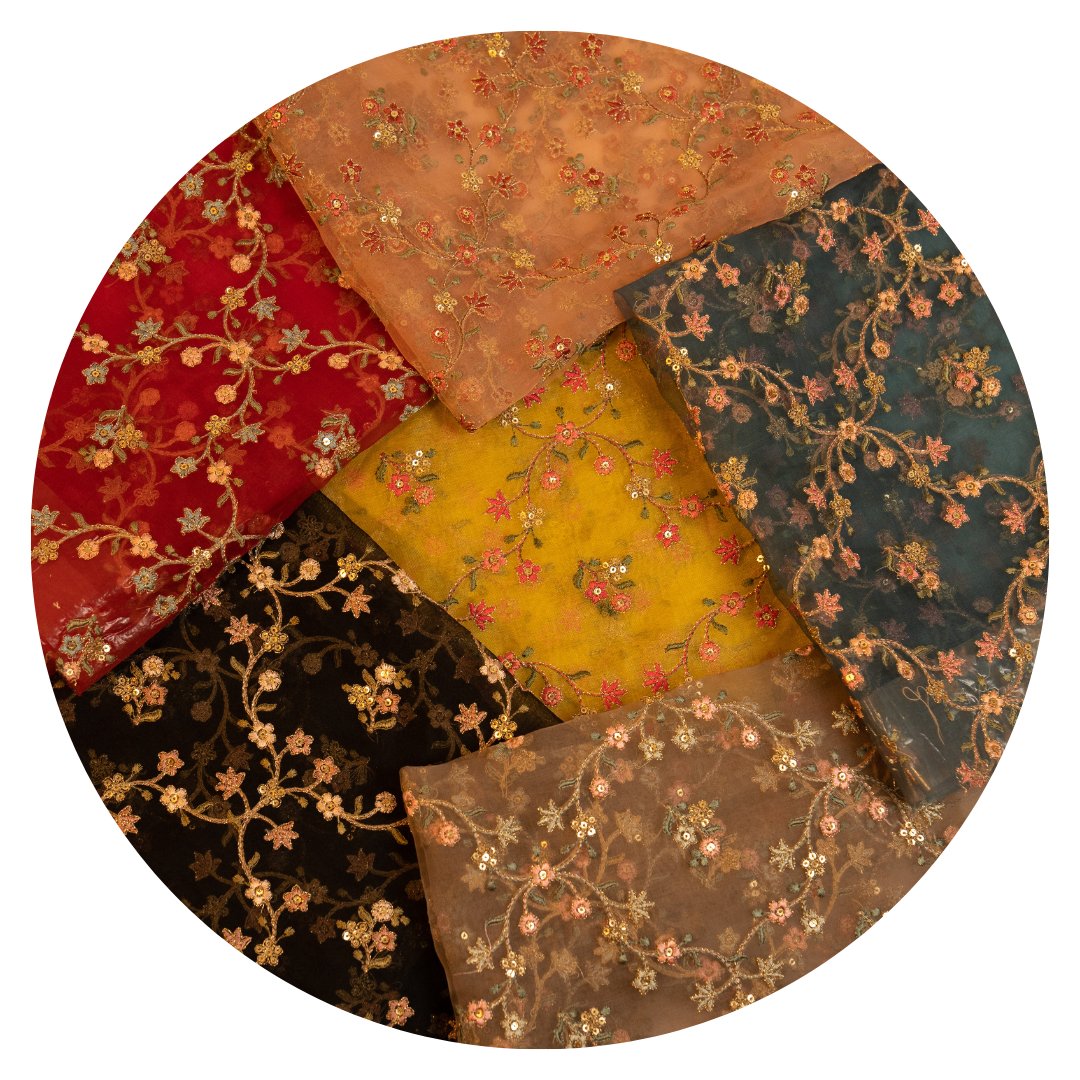
Silk organza is a thin, crisp, sheer fabric woven from tightly twisted silk threads, giving it a lightweight body that holds structure. It has a natural glossy sheen and a slightly stiff hand that makes it stand away from the body rather than cling. This crispness is why it drapes in sculpted folds and showcases embroidery so well. Buyers favour it for festive sarees, dupattas, and dramatic suits where a structured, shimmering finish matters more than soft, fluid movement.
2.Silk organza vs georgette: which is better?
Neither is universally better; choose organza for structure and shine, georgette for soft, fluid drape. Organza is crisp and sheer, holding sculpted shapes that photograph well and showcase embroidery, which suits statement sarees and dupattas. Georgette is heavier and flows in soft folds that cling and move with the body, making it comfortable for long wear and easy pleating. Pick organza when you want a standing, structured silhouette, and georgette when you want liquid movement and all-day comfort.
3.Silk organza vs chanderi: which should I choose?
Choose silk organza for a crisp, glossy, structured look, and chanderi for a softer, lighter, more breathable feel. Organza stands away from the body and showcases embroidery with sheen, ideal for dramatic festive and bridal pieces. Chanderi is soft, slightly sheer, and cooler to wear, which suits summer suits and daytime functions you will spend hours in. Decide by comfort versus drama: organza when you want sculpted shine on camera, chanderi when breathability and easy, all-day wear matter more.
4.Is silk organza suitable for weddings?
Silk organza is well suited to weddings, since its glossy sheen and structured drape photograph beautifully and showcase heavy embroidery under event lighting. It works especially well for evening receptions and sangeets where a sculpted, shimmering silhouette stands out. Because it is sheer, it usually needs lining for opacity and comfort. For daytime wedding events in heat, a lighter fabric may feel cooler, but for dressed-up evening functions, organza delivers presence that reads formal and rich on camera.
5.Does silk organza require lining?
Silk organza usually requires lining because it is sheer enough to see through on its own. A lining adds opacity, comfort against the skin, and a little structure that helps the fabric hold its shape. Most tailors pair it with a soft cotton or silk lining in a matching or contrasting tone. For sarees, the pallu and skirt may stay unlined for a floating effect while the blouse and bottom are lined, so confirm your preference before stitching.
6.Is silk organza difficult to stitch?
Silk organza is one of the trickier fabrics to stitch, since its crisp, slippery weave shifts under the needle and frays at cut edges. It needs careful pinning, fine needles, and clean seam finishes to look neat, which is easier for an experienced tailor. The sheerness also means seams show, so the inside work must be tidy. Beginners often find it frustrating, so for a first project a more stable fabric like cotton silk or chanderi is the safer choice.
7.Why is silk organza popular for festive wear?
Silk organza is popular for festive wear because its glossy sheen and crisp structure catch light dramatically and make embroidery stand out, exactly the effect celebration outfits aim for. It holds sculpted drapes that photograph well and gives a dressed-up, formal silhouette. The fabric also feels light despite its rich appearance, so it looks grand without heavy weight. Buyers reach for organza sarees and dupattas when they want maximum visual impact for weddings, receptions, and festival occasions.
8.How do I care for silk organza fabric?
Silk organza is best dry-cleaned, since its delicate sheer weave and surface embroidery can be damaged by machine washing or wringing. Store it rolled or loosely folded to avoid sharp creases, and hang it away from hooks that snag the threads. Iron on a low silk setting from the reverse, using a press cloth to protect the sheen, and steam embroidered areas rather than pressing them directly. Keep it out of prolonged direct sunlight, which can dull the colour over time.