




Embroidered Fabrics


FAQs
-
What is embroidered fabric?
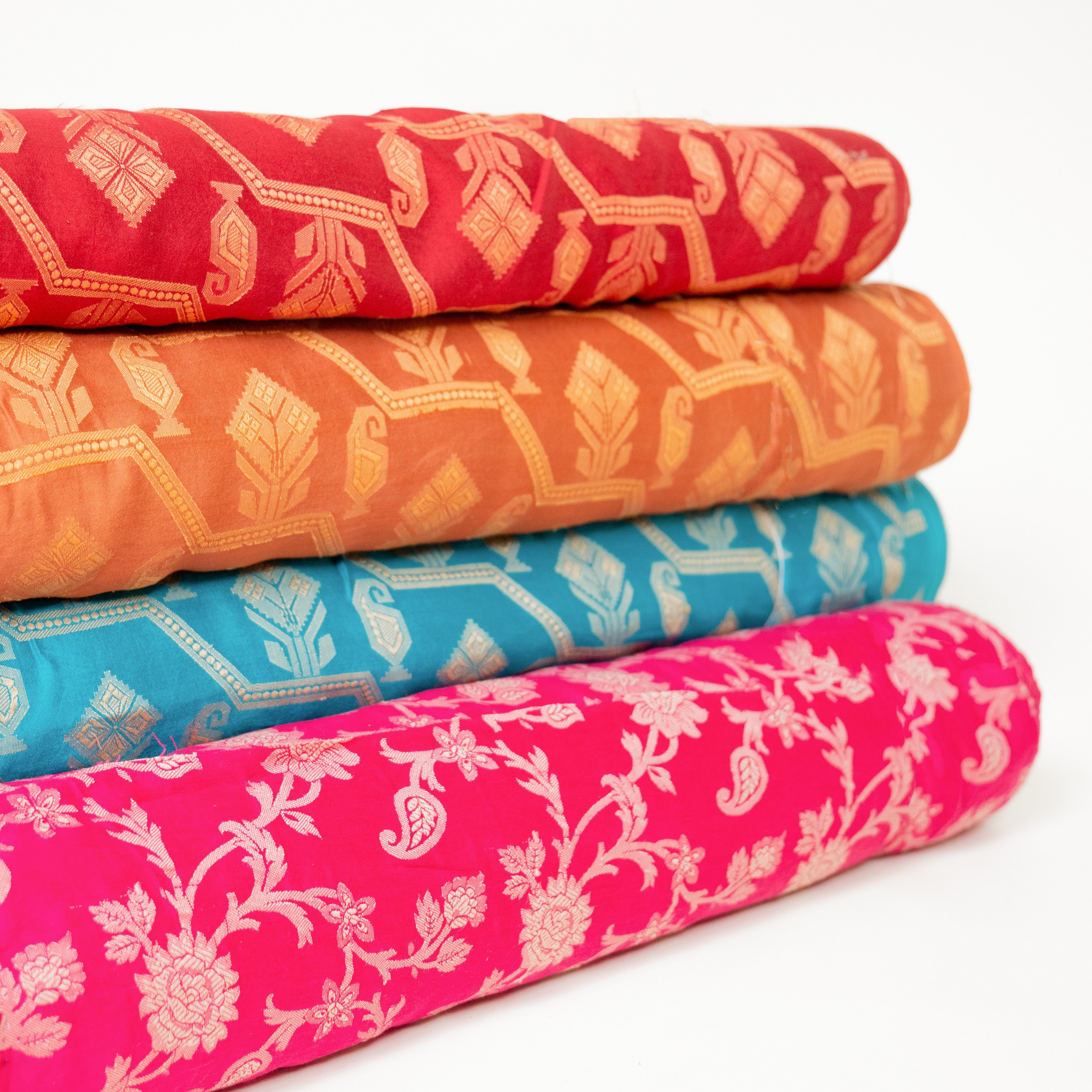
Embroidered fabric is base cloth decorated with thread, zari, sequins, or beadwork stitched onto its surface after weaving. The base can be silk, organza, chanderi, georgette, or cotton silk, and the embroidery adds raised texture and pattern. It is a popular choice for festive and bridal outfits because the surface detail catches light and reads as dressy. Buyers usually pick embroidered fabric by the metre when they want a garment with built-in ornamentation rather than plain cloth they would embellish later.
-
What is the difference between embroidered fabric and woven fabric?
The pattern in embroidered fabric is stitched onto the surface after the cloth is made, while woven fabric carries its design inside the weave itself. Embroidered pieces feel textured and richer, which is why they suit festive and wedding wear where detail should stand out. Woven fabrics drape more fluidly and tend to be lighter, making them better for everyday and layered outfits. Choose embroidered when you want a statement garment, and woven when versatility and easy drape matter more than surface ornamentation.
3.Which embroidered fabric is best for sarees?
Embroidered georgette and embroidered silk organza make the best saree fabrics, since both drape in soft, flowing folds that move well around the body. Georgette gives a fluid, slightly heavier fall that pleats neatly, while organza offers a crisper, structured drape that holds its shape for photographs. Cotton silk works too if you prefer a saree with more body and less cling. For a wedding-guest saree, organza reads more formal; for comfort through a long event, georgette tends to win.
4.Which embroidered fabric is best for suits?
Embroidered chanderi and embroidered cotton silk are the strongest suit fabrics, balancing structure for the kurta with comfort across a full day. Chanderi stays light and slightly sheer, ideal for summer and daytime functions, while cotton silk gives a little more body and a gentle sheen for dressier occasions. For heavier winter or wedding suits, embroidered silk or velvet adds richness. Match the kurta and dupatta weight to your season first, then decide how elaborate you want the embroidery to be.
5.Which embroidered fabric is best for weddings?
For weddings, embroidered silk organza and embroidered velvet carry the richest presence, with organza giving a glossy structured drape and velvet adding depth for winter evening functions. Chanderi and cotton silk suit daytime ceremonies like mehendi and haldi, where breathability matters through hours of wear. Heavier zari and resham embroidery photograph beautifully under event lighting. Decide by function and time of day: structured, ornate fabrics for evening receptions, lighter breathable ones for daytime rituals you will sit through for hours.
6.Which embroidered fabric is best for summer?
Embroidered cotton silk and embroidered chanderi handle summer best, staying breathable while still looking dressy enough for occasions. Cotton silk carries a soft sheen without trapping heat, and chanderi is light and slightly sheer, letting air move during daytime functions. Both resist the sticky cling that heavier silks cause in peak heat. For an evening summer event needing more drama, embroidered organza works for a few hours, though the lighter fabrics stay more comfortable across a long, warm day.
7.Which embroidered fabric drapes the best?
Embroidered georgette drapes the best of the lot, falling in soft, fluid folds that move naturally and pleat cleanly for sarees and flared garments. Silk organza drapes well too but in a crisper, more structured way that holds shape rather than flowing. Cotton silk sits in between, with gentle drape and a bit more body. If you want liquid movement choose georgette; if you want a sculpted, standing silhouette that holds its form on camera, organza is the better pick.
8.How do I choose the right embroidered fabric for my project?
Start with the garment and the occasion, then work backward to the fabric. For flowing sarees pick georgette or organza; for structured suits choose chanderi or cotton silk; for blouses lean toward firmer silk or organza that holds shaping. Factor in season next, since cotton silk and chanderi breathe for summer while velvet and heavier silk suit winter. Finally weigh the embroidery density against your event, keeping ornate work for weddings and lighter motifs for daily or office wear.
9.Which embroidered fabric looks the most expensive?
Embroidered silk organza and embroidered velvet read as the most expensive, thanks to organza's glossy sheen and velvet's deep, light-absorbing richness. Dense zari and resham work amplifies that effect, catching light in a way that signals craftsmanship. Raw silk also looks high-end because of its natural slubbed texture and matte luxury. If your goal is a costly-looking outfit on camera, choose a structured fabric with reflective embroidery, since shine and surface depth are what the eye reads as premium.
10.Which embroidered fabric is easiest to maintain?
Embroidered cotton silk is the easiest to maintain, since it resists heavy creasing, takes gentle pressing well, and tolerates careful home care better than delicate silks. Chanderi is also manageable, though its sheerness needs softer handling. Organza and velvet demand more caution and usually dry cleaning to protect the embroidery and surface. If low-fuss upkeep is your priority, choose cotton silk; if you want a dramatic fabric and accept professional cleaning, organza and velvet remain worth it for special occasions.
11.Which embroidered fabric is easiest to stitch?
Embroidered cotton silk is the easiest to stitch, since it sits flat under the needle, does not slip, and holds seams cleanly without puckering around the embroidery. Chanderi is similarly cooperative, light but stable. Organza and georgette are harder because they shift and fray, and dense embroidery adds bulk a tailor must work around. For a smoother stitching experience, especially with a newer tailor, cotton silk or chanderi gives the most predictable result and the neatest finished seams.
12.How much embroidered fabric do I need for a suit or saree?
A standard suit needs roughly 2 to 2.5 metres for the kurta, 2 metres for the bottom, and 2.25 to 2.5 metres for the dupatta, so about 6.5 metres total. A saree usually requires 5.5 metres including blouse, though embroidered borders may need extra for pattern matching. Always add a little for tall heights or pleated styles. When in doubt, order slightly more from the same dye lot, since embroidered fabric is hard to match exactly later.